
Smart Queueing for Shoe Repair
Smart Queueing for Shoe Repair
Smart Queueing for Shoe Repair
Helping cobbler manage time and tasks with clarity and ease.
Helping cobbler manage time and tasks with clarity and ease.
Helping cobbler manage time and tasks with clarity and ease.
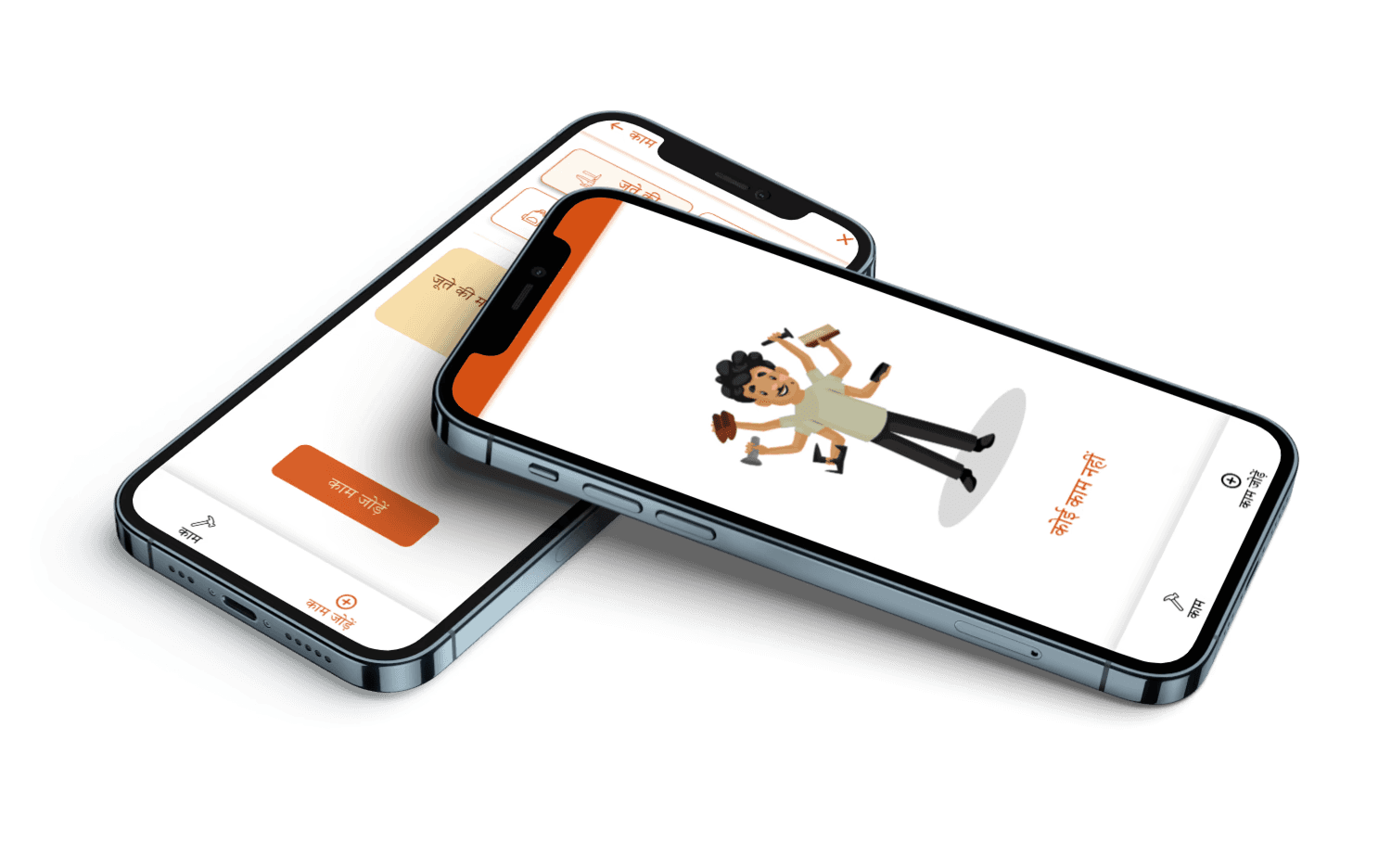
Overview
Overview
One afternoon, I visited a local cobbler in my neighborhood to get a pair of shoes repaired. While waiting, I noticed a small crowd forming — people dropping off shoes, asking about pick-up times, and the cobbler trying to juggle it all with memory alone.
That’s when a simple question popped into my head:
“What if cobblers had a tool to manage this chaos — just like salons or clinics do?”
This curiosity led me to design a simple, intuitive app specifically for this cobbler — not as a client project, but as a personal challenge to see how a product designer like me could solve a hyper-local, real-world problem.
From understanding his workflow to imagining how digital support could ease his day, this project is a reflection of how I think, empathize, and design with purpose — no matter how small the business or big the idea.
One afternoon, I visited a local cobbler in my neighborhood to get a pair of shoes repaired. While waiting, I noticed a small crowd forming — people dropping off shoes, asking about pick-up times, and the cobbler trying to juggle it all with memory alone.
That’s when a simple question popped into my head:
“What if cobblers had a tool to manage this chaos — just like salons or clinics do?”
This curiosity led me to design a simple, intuitive app specifically for this cobbler — not as a client project, but as a personal challenge to see how a product designer like me could solve a hyper-local, real-world problem.
From understanding his workflow to imagining how digital support could ease his day, this project is a reflection of how I think, empathize, and design with purpose — no matter how small the business or big the idea.
Problem Statement
Problem Statement
Local cobblers often struggle with managing multiple customer requests, estimating repair times, and organizing daily tasks — all without any digital support. This leads to long wait times, miscommunication, and a chaotic workflow that affects both the cobbler’s efficiency and the customer experience.
Local cobblers often struggle with managing multiple customer requests, estimating repair times, and organizing daily tasks — all without any digital support. This leads to long wait times, miscommunication, and a chaotic workflow that affects both the cobbler’s efficiency and the customer experience.
User Research
User Research
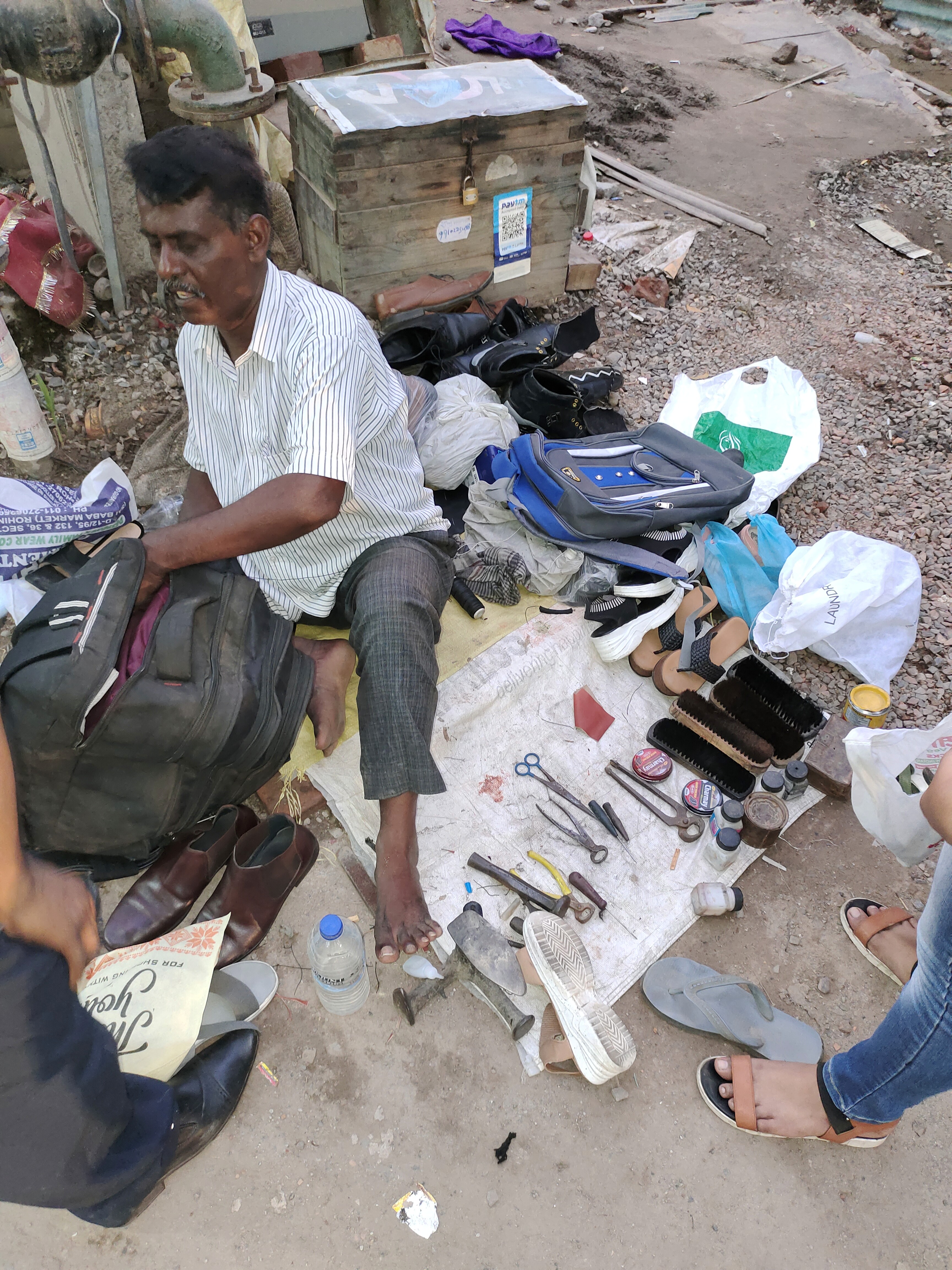
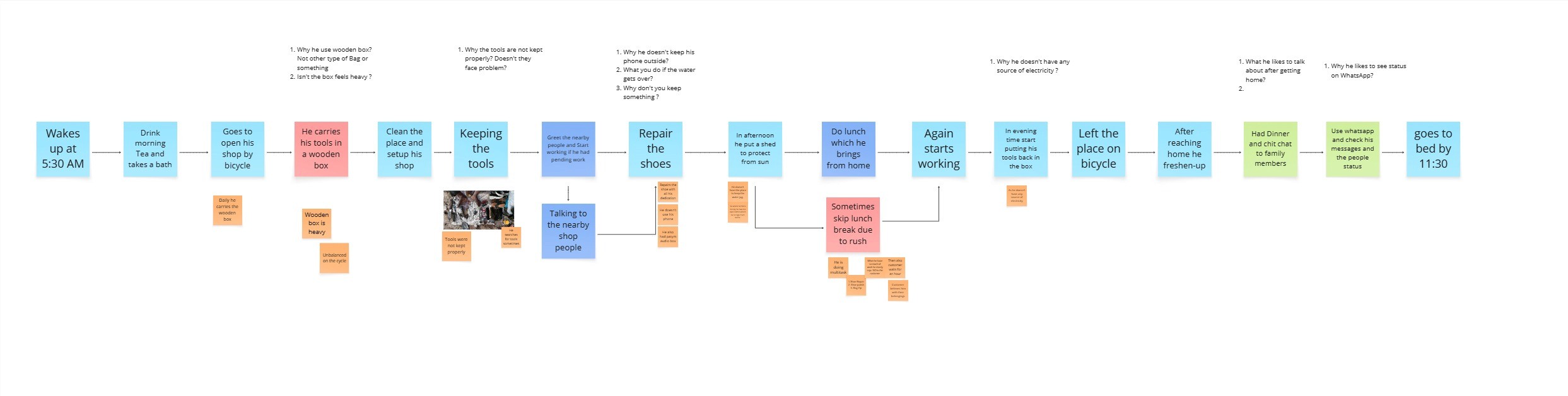
To truly understand the cobbler’s daily challenges, I followed a DILO (Day in the Life Of) approach. I spent a full day with him — observing, listening, and asking questions. From opening his shop in the morning to handling the evening rush, I watched how he managed repairs, tracked orders, and handled walk-ins
Through this DILO approach, I saw the pain points clearly: task overload, miscommunication, and no way to manage time or crowd efficiently. This hands-on observation shaped the foundation of my solution — rooted in empathy and everyday reality.
To truly understand the cobbler’s daily challenges, I followed a DILO (Day in the Life Of) approach. I spent a full day with him — observing, listening, and asking questions. From opening his shop in the morning to handling the evening rush, I watched how he managed repairs, tracked orders, and handled walk-ins
Through this DILO approach, I saw the pain points clearly: task overload, miscommunication, and no way to manage time or crowd efficiently. This hands-on observation shaped the foundation of my solution — rooted in empathy and everyday reality.
Insight
Insight
After following the DILO approach, I uncovered key workflow challenges. I categorized the insights into Customer Flow, Order Management, and Tech Readiness.
After following the DILO approach, I uncovered key workflow challenges. I categorized the insights into Customer Flow, Order Management, and Tech Readiness.
● The cobbler had no structured way to track who came first, leading to crowding and confusion.
● Ongoing tasks were regularly interrupted by new customers asking for status or time estimates.
● Time estimates were often made on the spot without a clear method, causing delays or missed expectations.
Customer Flow
● The cobbler had no structured way to track who came first, leading to crowding and confusion.
● Customers had to remember their own pick-up time; there was no way for the cobbler to notify them when a repair was ready.
Order Management
● The cobbler already accepts UPI payments, showing familiarity and comfort with using mobile apps.
● Though his setup was manual, he was open to improvements as long as they didn’t disrupt his routine.
Technology Readiness
Ideation
Ideation
Using the insights from my DILO research, I translated the cobbler’s daily challenges into clear design opportunities. The goal was to simplify his workflow, reduce confusion, and improve communication with customers.
I identified three key solution areas:
Digital Task Tracker: A simple tool to record, organize, and prioritize daily repair requests.
Status Updates: A quick way to notify customers when their items are in progress or ready for pickup.
Time Estimator: An automatic suggestion feature to help the cobbler give accurate delivery timelines based on current workload.
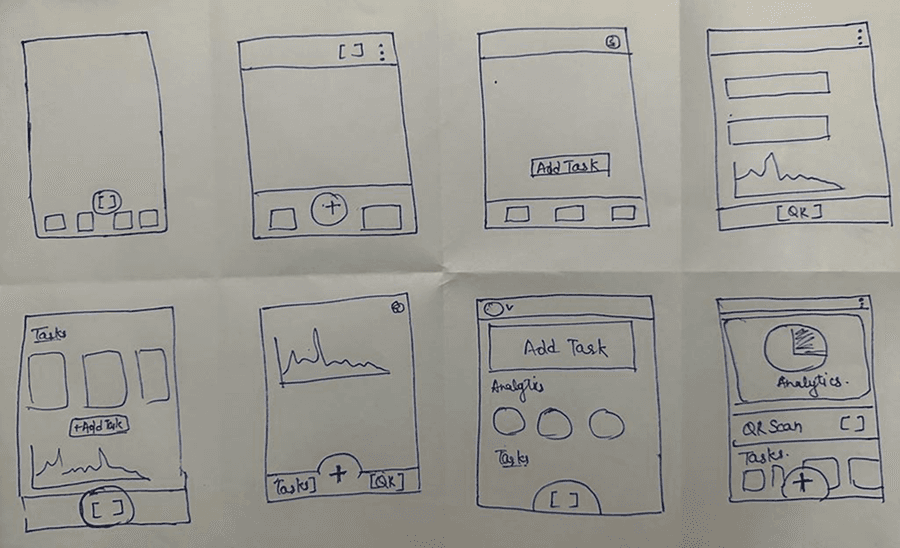
To visualize these ideas, I created initial sketches and user flows focusing on:
A Home Screen showing all ongoing and pending jobs at a glance.
An Add Request form to capture customer details, item type, issue, and estimated delivery date.
A Notification System that sends one-tap alerts to customers when their items are ready.
Using the insights from my DILO research, I translated the cobbler’s daily challenges into clear design opportunities. The goal was to simplify his workflow, reduce confusion, and improve communication with customers.
I identified three key solution areas:
Digital Task Tracker: A simple tool to record, organize, and prioritize daily repair requests.
Status Updates: A quick way to notify customers when their items are in progress or ready for pickup.
Time Estimator: An automatic suggestion feature to help the cobbler give accurate delivery timelines based on current workload.
To visualize these ideas, I created initial sketches and user flows focusing on:
A Home Screen showing all ongoing and pending jobs at a glance.
An Add Request form to capture customer details, item type, issue, and estimated delivery date.
A Notification System that sends one-tap alerts to customers when their items are ready.
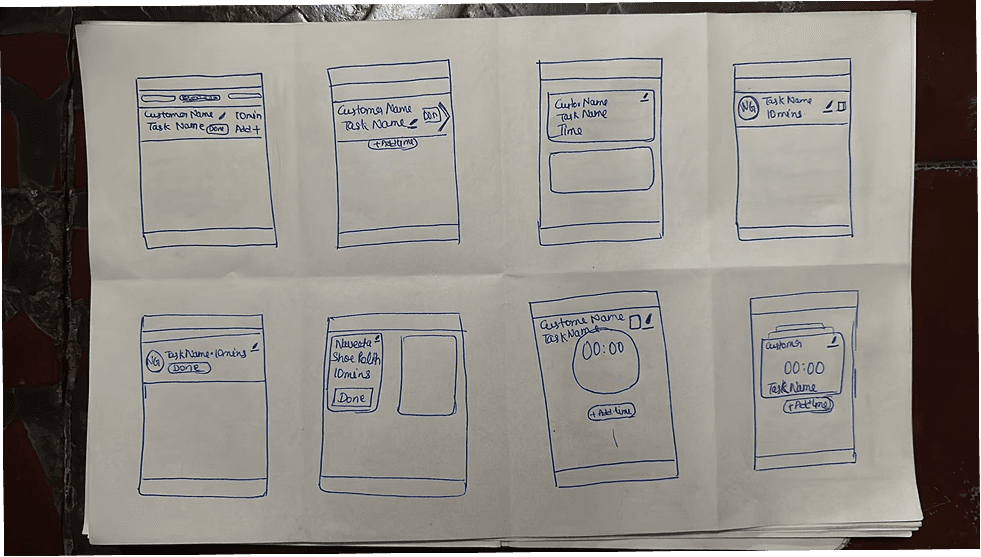
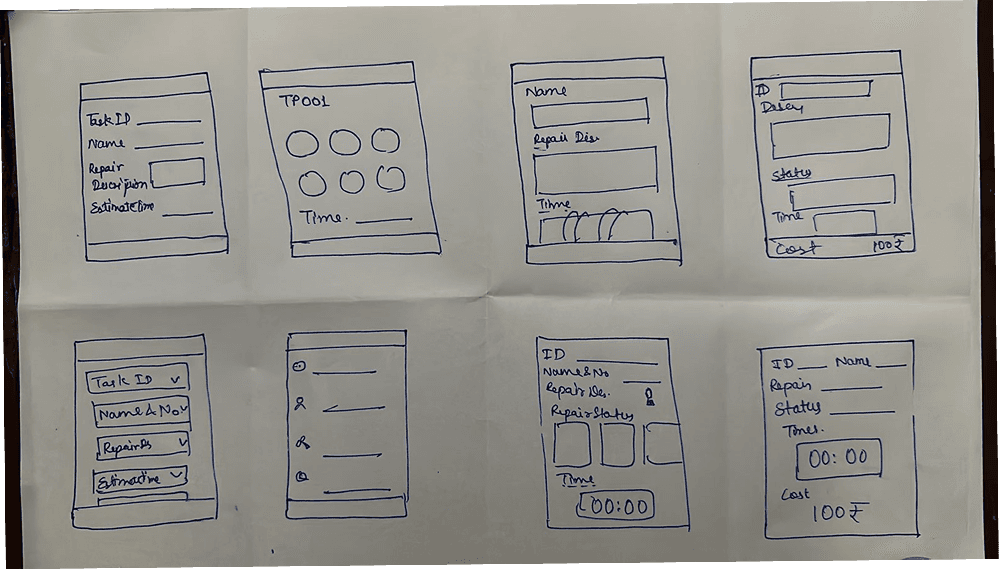
Wireframe
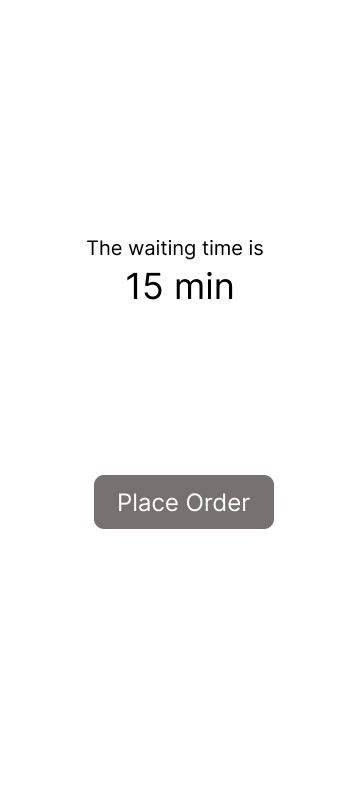
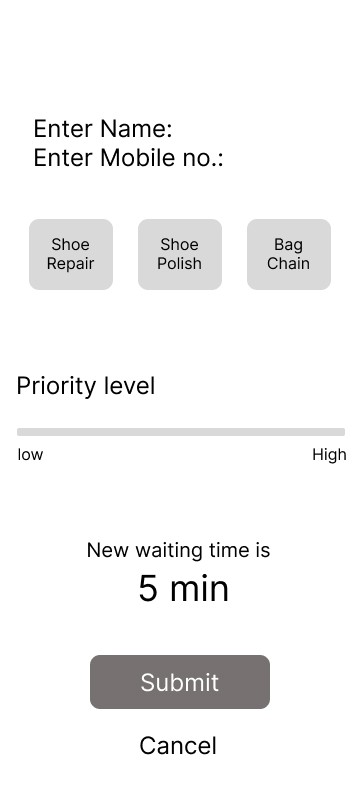
Customer Flow
Customer Flow

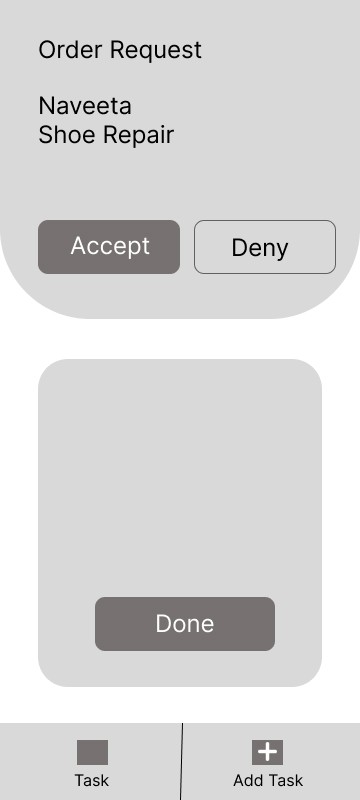
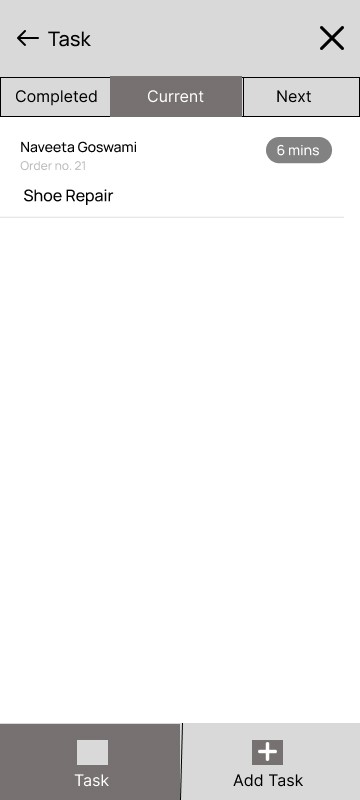
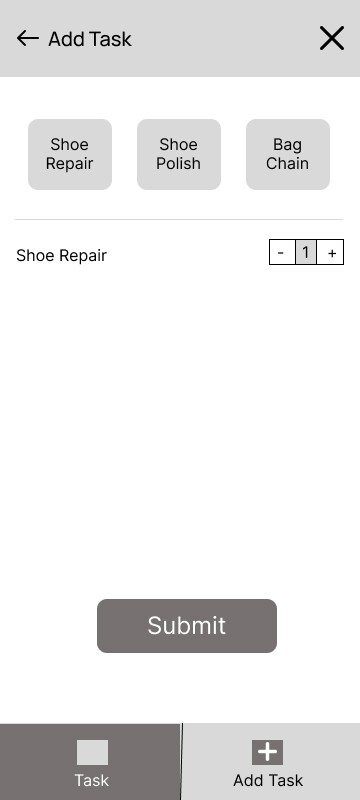
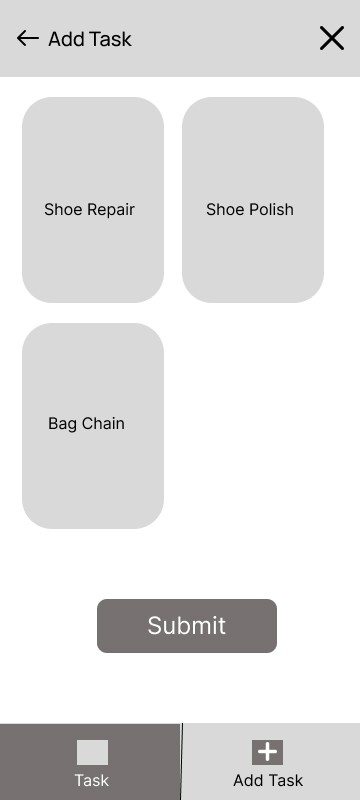
Vendor Flow
Vendor Flow

User Feedback
User Feedback
During usability testing, I gathered valuable feedback that helped refine the design. He appreciated the simple and easy-to-understand layout but suggested having larger buttons and bold icons for better visibility while working outdoors. He also wanted the voice input feature, as it will allow him to record customer details quickly without needing to type. The cobbler liked the idea of a color-coded order status system (red for high demand, yellow for moderate demand , green for low demand) to easily track needyness. One important insight was that he was not comfortable using English, and he specifically requested the app to be available in his local language for better understanding and comfort. This feedback helped me make the design more practical, accessible, and truly tailored to the cobbler’s real working conditions.
During usability testing, I gathered valuable feedback that helped refine the design. He appreciated the simple and easy-to-understand layout but suggested having larger buttons and bold icons for better visibility while working outdoors. He also wanted the voice input feature, as it will allow him to record customer details quickly without needing to type. The cobbler liked the idea of a color-coded order status system (red for high demand, yellow for moderate demand , green for low demand) to easily track needyness. One important insight was that he was not comfortable using English, and he specifically requested the app to be available in his local language for better understanding and comfort. This feedback helped me make the design more practical, accessible, and truly tailored to the cobbler’s real working conditions.
Next Step
Next Step
To further improve the app’s usability, the next step would be to conduct testing with more cobblers from different backgrounds to understand varied workflows and language needs. This will help validate whether the current design works well across users or if additional adjustments are needed
To further improve the app’s usability, the next step would be to conduct testing with more cobblers from different backgrounds to understand varied workflows and language needs. This will help validate whether the current design works well across users or if additional adjustments are needed
Let's Talk
Feel free to reach out for collaborations or just a friendly hello 😁
© 2026 Naveeta Goswami. Made with 💛 and too many coffee breaks.
Let's Talk
Feel free to reach out for collaborations or just a friendly hello 😁
© 2026 Naveeta Goswami. Made with 💛 and too many coffee breaks.
Let's Talk
Feel free to reach out for collaborations or just a friendly hello 😁
© 2026 Naveeta Goswami. Made with 💛 and too many coffee breaks.