Redesigning Recruitment at Scale
ROLE
UX Designer
TIMELINE
1 Week (AI-accelerated)
DOMAIN
Recruitment
STAKEHOLDERS
Business + Product
ROLE
ROLE
UX Designer
UX Designer
TIMELINE
TIMELINE
1 Week (AI-accelerated)
DOMAIN
DOMAIN
InsurTech / Recruitment
STAKEHOLDERS
STAKEHOLDERS
Business + Product + Tech
01 — The Problem
01 — The Problem
Three compounding failures in one platform
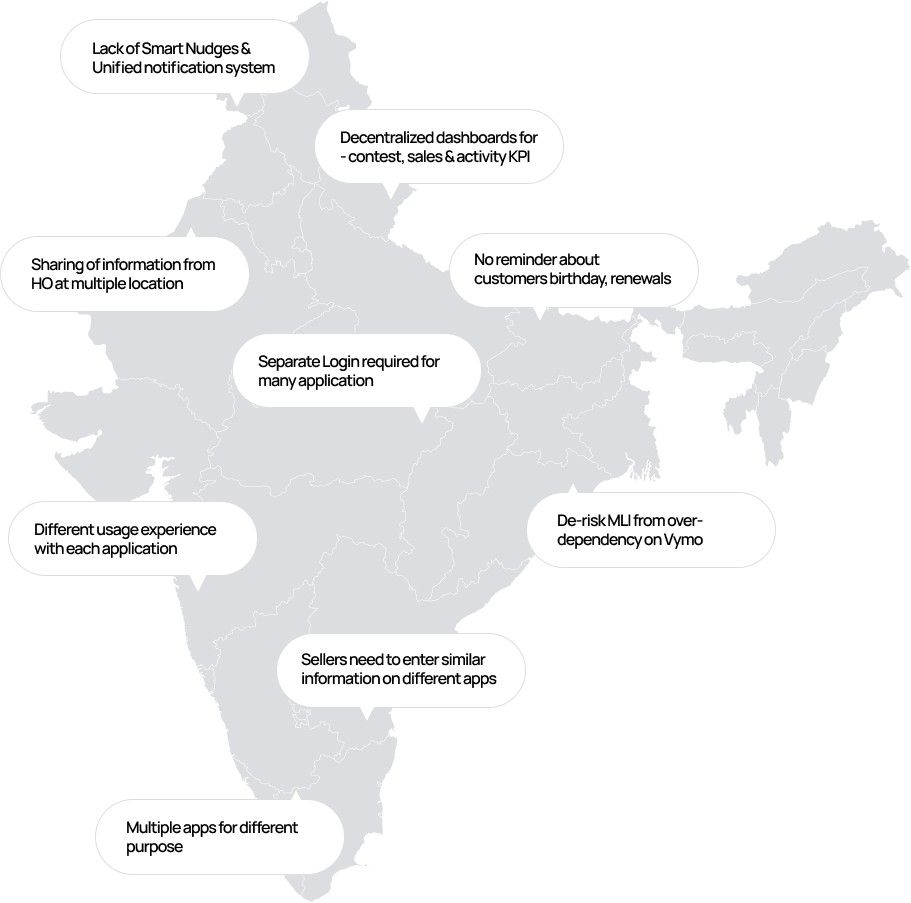
The existing Axis Max Life agent recruitment platform was hemorrhaging potential advisors at every stage. The problems weren't isolated — they fed each other, creating a funnel so leaky that 98–99% of leads never made it to onboarding.
01
Outdated design system
Inconsistent components, legacy styling, no coherent visual language across screens
Confusing navigation
Recruiters lost context switching between stages. No clear journey map or progress cues.
02
3–4 month cycle
Lead to URN generation took months. Friction at every step killed intent and momentum.
03
Old platform — what we were working with
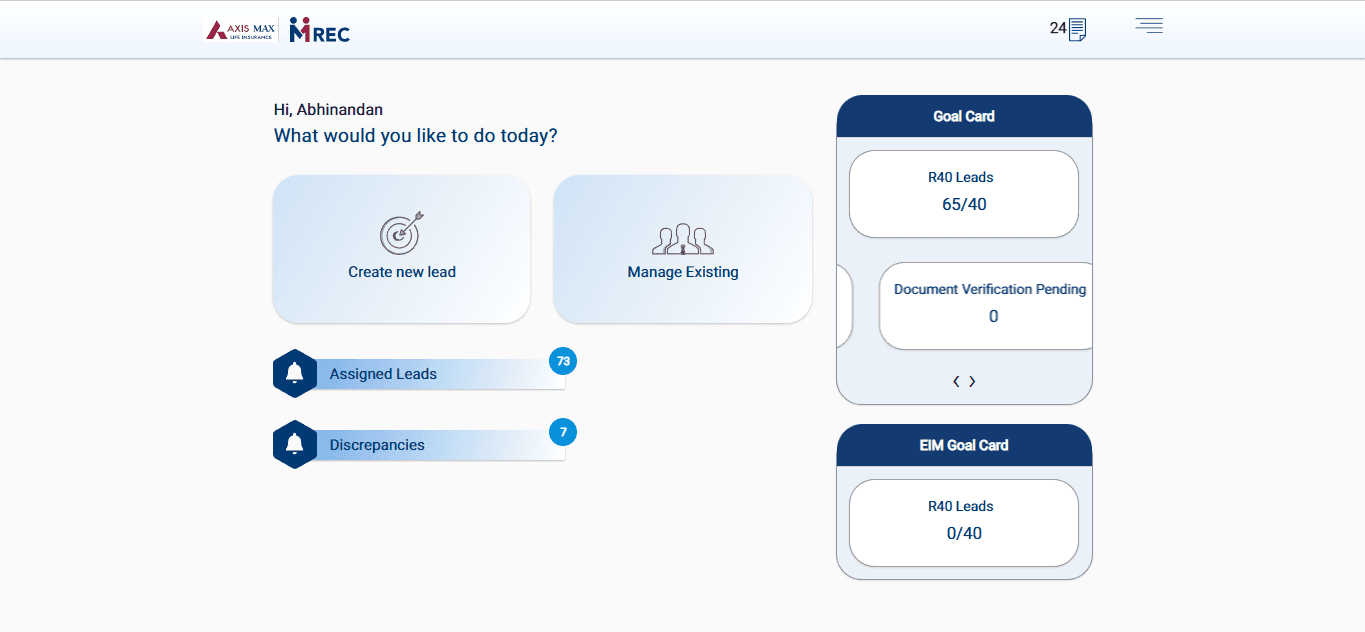
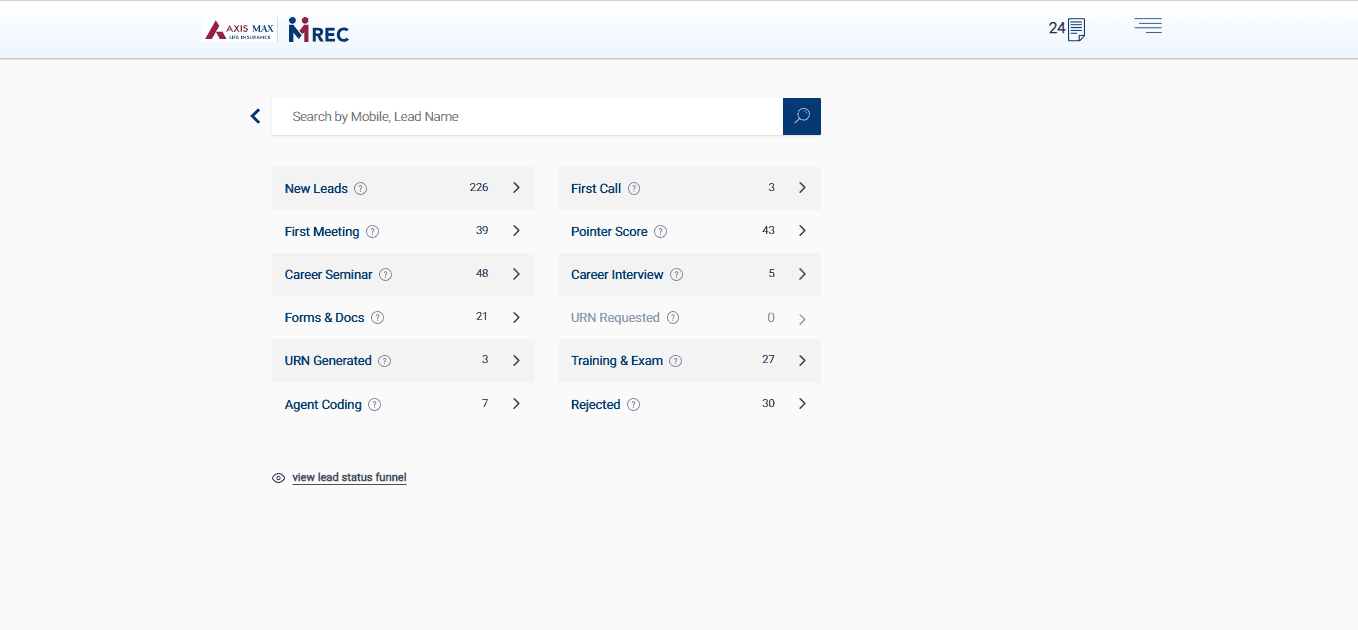
Before diving into solutions, here's what the existing platform actually looked like. These screens capture the inconsistency, visual noise, and lack of navigational clarity that recruiters were dealing with every day.


Before - Dashboard
Before - Dashboard

Legacy dashboard — inconsistent card styles, no clear journey entry point, cluttered hierarchy.
Before - Lead Details

Lead detail view — no stage visibility, form-heavy layout, zero indication of what comes next.
02 — Business context
A broken funnel with massive upside
With a 1–2% lead conversion rate and a 3–4 month cycle from first contact to generating a URN (Unique Registration Number), the platform was actively working against Axis Max Life's growth targets. Every month of delay meant advisors losing interest and dropping off entirely.
Current recruitment journey
L
Lead in
Day 0
Q
Qualify
Wk 2–3
D
Docs
Mo 1–2
T
Training
Mo 2–3
U
URN gen
Mo 3-4
Before: 3–4 months
Target: 3–4 weeks
Current recruitment journey
L
Lead in
Day 0
Q
Qualify
Wk 2–3
D
Docs
Mo 1–2
T
Training
Mo 2–3
U
URN gen
Mo 3-4
Before: 3–4 months
Target: 3–4 weeks
The redesign goal: dramatically reduce time-to-URN, fix drop-off at each stage, and bring the interface in line with the expectations of a mobile-first recruiter workforce — all without building a new design system from scratch.
03 — Process: AI-accelerated design
From Requirement to sign-off
The traditional design process for a project of this scale typically runs 5–6 months. I restructured the process by using AI as a layout exploration and alignment tool early on, then executing the final design entirely in Figma using our existing design system components.
The key insight: AI didn't replace any phase of the design process. It compressed the phases that were slow because of production overhead — not because they required deep thinking.
The traditional design process for a project of this scale typically runs 5–6 months. I restructured the process by using AI as a layout exploration and alignment tool early on, then executing the final design entirely in Figma using our existing design system components.
The key insight: AI didn't replace any phase of the design process. It compressed the phases that were slow because of production overhead — not because they required deep thinking.
The traditional design process for a project of this scale typically runs 5–6 months. I restructured the process by using AI as a layout exploration and alignment tool early on, then executing the final design entirely in Figma using our existing design system components.
The key insight: AI didn't replace any phase of the design process. It compressed the phases that were slow because of production overhead — not because they required deep thinking.
BRD → structured design brief
Fed the BRD into the AI tool to extract goals, journey stages and pain points. Validated against domain knowledge.
AI layout exploration
Generated multiple layout directions — navigation models, dashboard structures, journey flows. Wide solution space, no manual wireframing.
Stakeholder review and direction sign-off
Showed concrete layouts to business and product stakeholders. Specific feedback, fast alignment. One direction signed off to proceed.
Final design built in Figma
Composed existing design system components into the signed-off structure. Full journey from lead intake to URN — every screen, edge case and flow.
Tweaks, sign-off and handoff
Polish, copy and edge case fixes only. No structural surprises — direction was already agreed. Final sign-off and dev handoff done.
04 — Design solutions
What actually changed in the final design
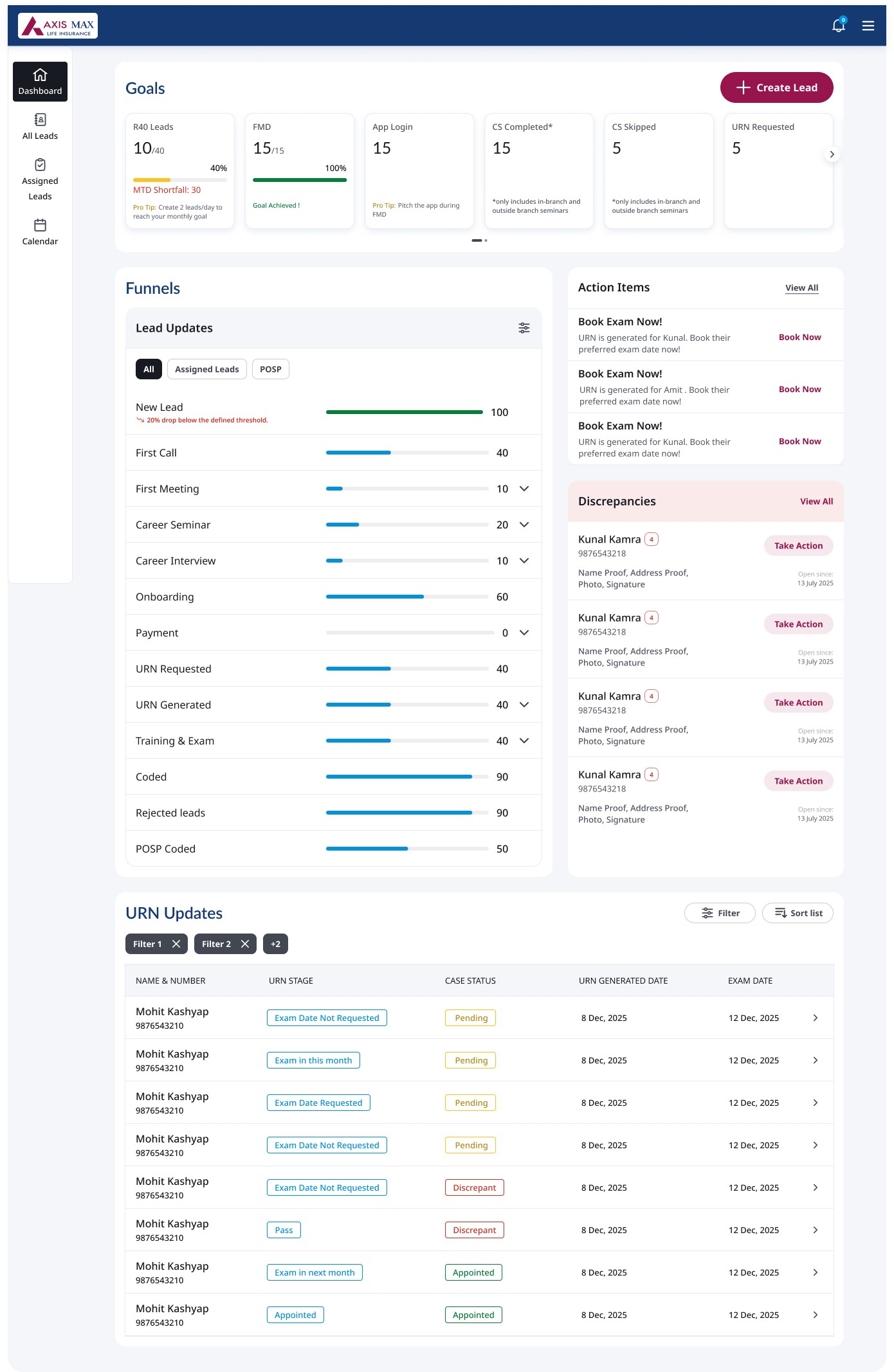
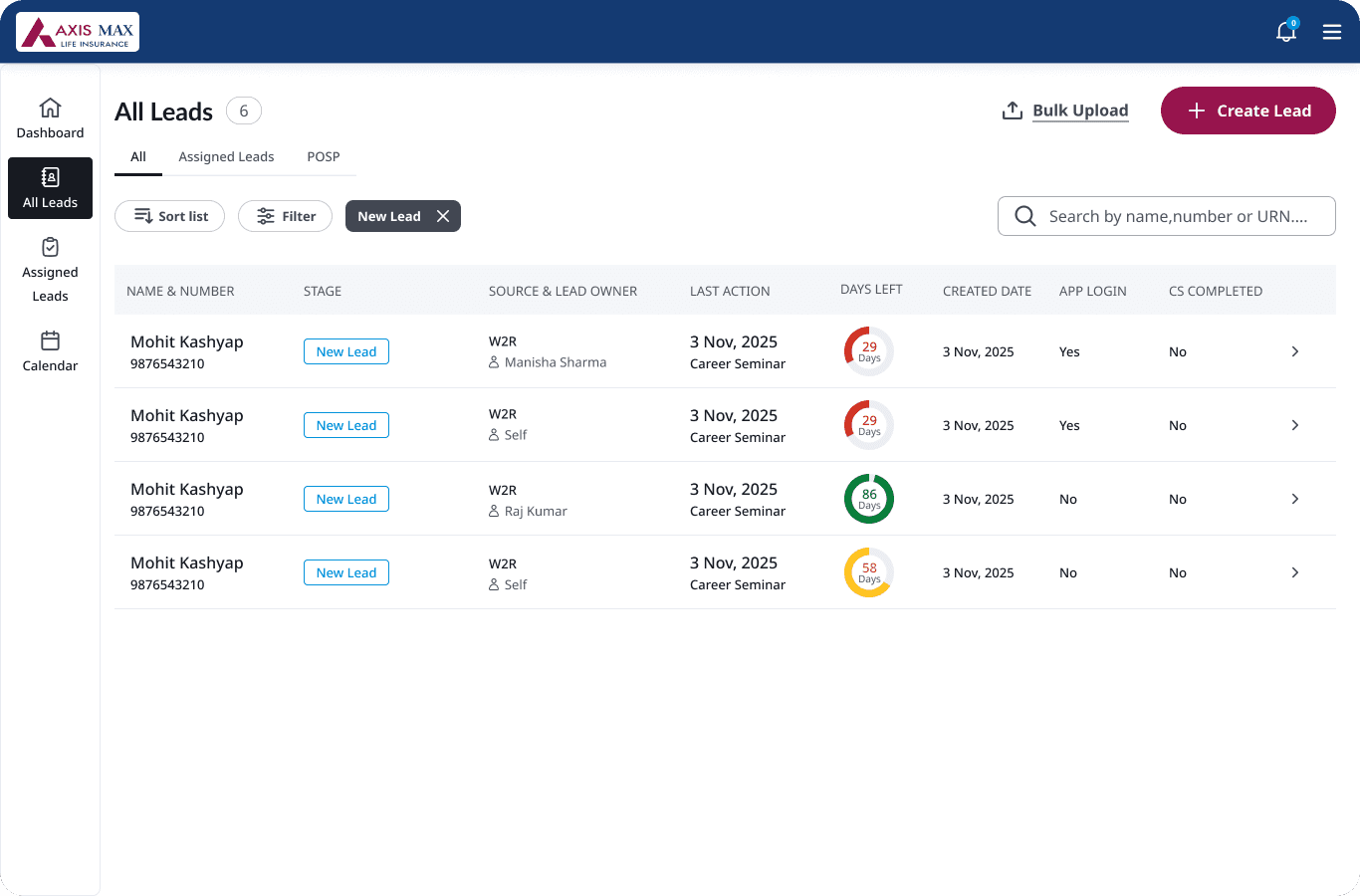
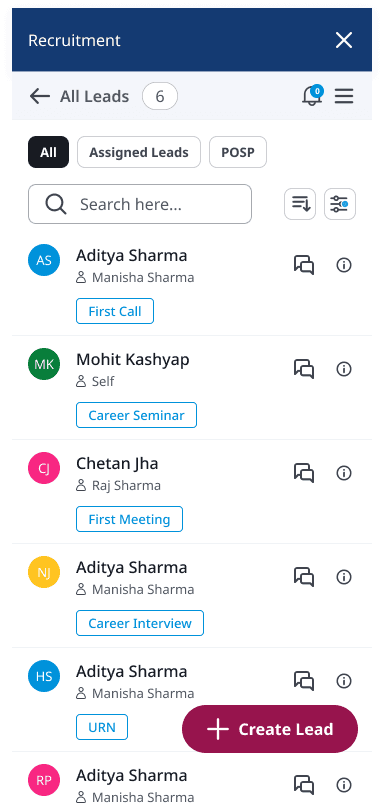
The Figma designs resolved all three original failure modes. Each solution was built with existing design system components — the work was in the decisions about structure, hierarchy, and flow, not in building new UI from scratch.
Solved
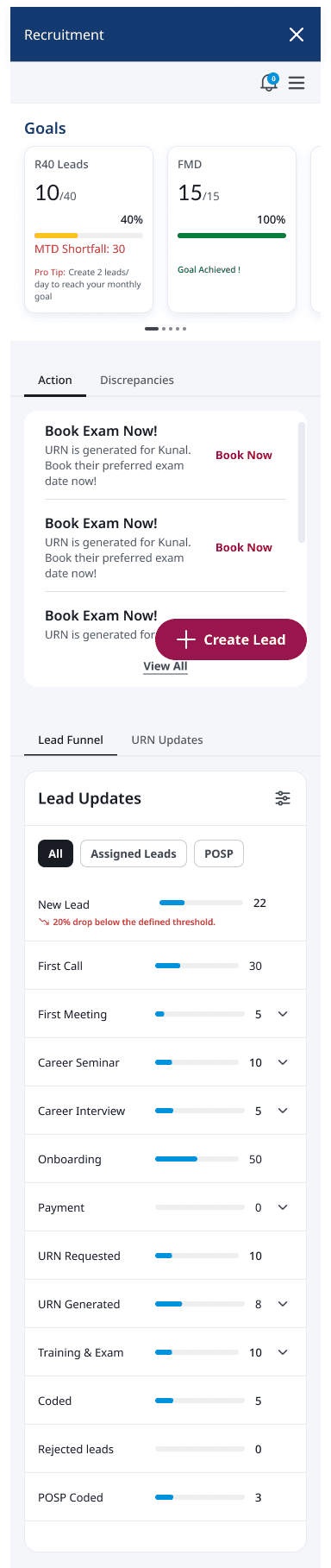
Consistent design using existing system components
Replaced inconsistent legacy UI with a coherent visual language built entirely from the existing design system — standardising card usage, button hierarchy, form states, and colour tokens. Every screen now feels part of the same product family.


Solved
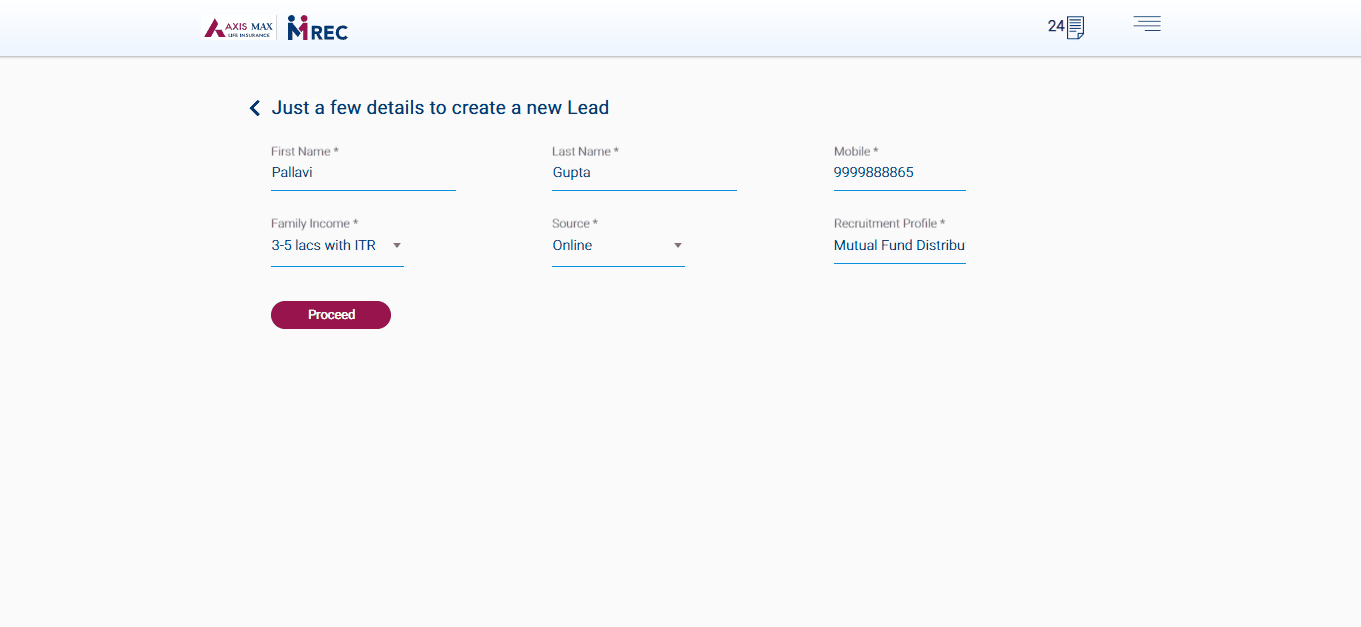
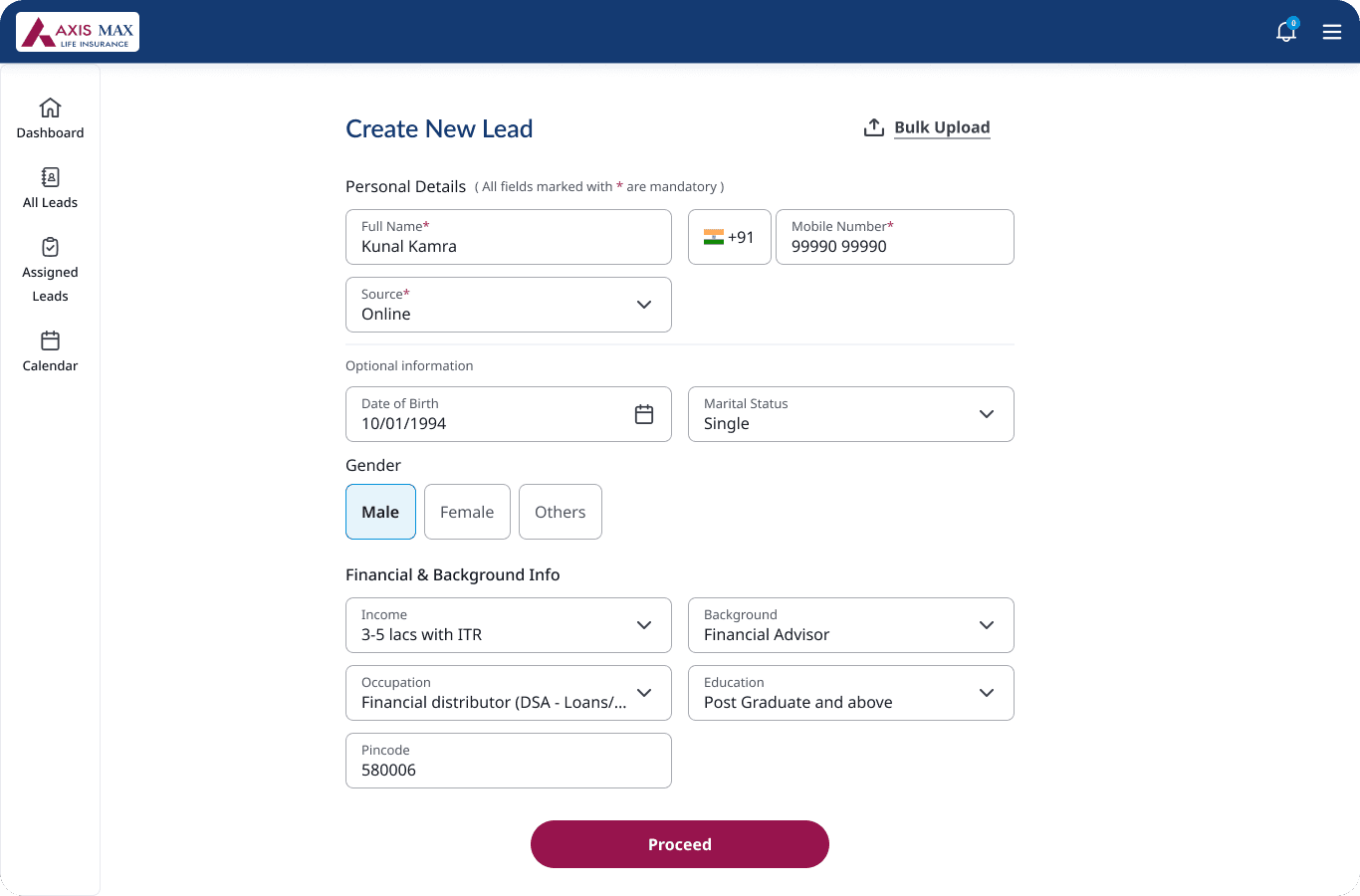
Stage-based navigation with persistent progress visibility
Introduced a persistent navigation model showing recruiters exactly where each lead sits in the journey — lead intake, document collection, eligibility check, training, URN generation. Every screen has a clear next action. Context-switching confusion is eliminated
Solved
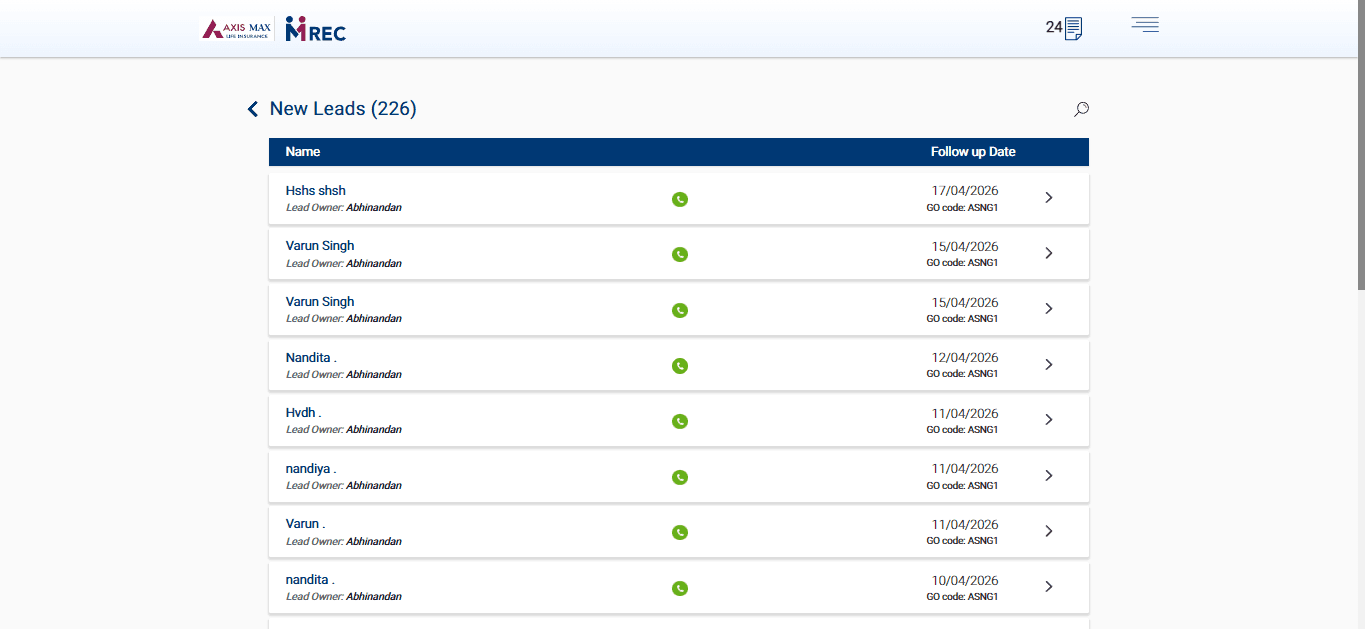
Simplified journey to increase conversion
Redesigned the journey flow to reduce unnecessary steps, surface blockers early, and make each stage completable in a single session. The goal: make the path from lead to URN feel short and achievable — not like a 4-month administrative marathon.

05 — Outcomes
05 — Outcomes
Results that changed the conversation
Stakeholder sign-off came in one round of revisions. The quality of the Figma designs — grounded in the existing design system and backed by an already-approved structural direction — meant there were no surprises in the final review.
7 days
Design cycle vs 5–6 months
8–12%
Projected conversion vs 1–2%
1 round
To final stakeholder sign-off
3–4 wks
Target time-to-URN vs 4 months
06 — Reflection
06 — Reflection
What this project taught me about AI in UX design
AI is most valuable at the beginning — when the problem is still open and you need to explore a wide solution space quickly before committing to a direction.
Design and development of high-converting sales landing pages tailored for real estate listings, lead generation, and promotional campaigns.
The real time saving wasn't AI generating screens. It was getting stakeholder alignment on Day 4 instead of Month 2. That one shift is what made one week possible.
Dedicated pages to showcase ongoing or completed construction projects, including project timelines, milestones, and photo galleries.
Building the final design in Figma with the existing design system — not from AI output — was the right call. Stakeholders trust Figma files. They know what they're approving.
Creation of a clear and accessible Frequently Asked Questions section to improve user trust and reduce support inquiries.
Having an existing design system was a genuine competitive advantage. It meant the Figma work was about structure and judgment, not production. AI + design system is a powerful combination.
Implementation of contact forms, business location, and team contact details, integrated with email and map functionalities.
AI never replaced the thinking — journey architecture, navigation decisions, edge cases, recruiter mental models. Those stayed entirely human. AI cleared the runway for that thinking to happen faster.
Implementation of contact forms, business location, and team contact details, integrated with email and map functionalities.
Let's Talk
Feel free to reach out for collaborations or just a friendly hello 😁
© 2026 Naveeta Goswami. Made with 💛 and too many coffee breaks.
Let's Talk
Feel free to reach out for collaborations or just a friendly hello 😁
© 2026 Naveeta Goswami. Made with 💛 and too many coffee breaks.
Let's Talk
Feel free to reach out for collaborations or just a friendly hello 😁
© 2026 Naveeta Goswami. Made with 💛 and too many coffee breaks.